
While the tax treatment does legitimise past crypto transactions, there is a possibility that any, or all, private cryptocurrencies will be banned in future.

The rupee depreciated 6 paise to 77.50 against the US dollar in the opening trade on Wednesday as a surging American currency in the overseas markets and persistent foreign fund outflows weighed on investor sentiment. Besides, rising global crude prices impacted the domestic unit, forex traders said. However, a higher opening in the domestic equity market restricted the rupee's fall, they added.

The rupee on Tuesday recovered from its all-time intra day low of 77.79 to close higher by 7 paise on a stellar rally in domestic stock markets. After opening lower at 77.67, the local unit plunged further to its all-time intra-day low of 77.79 due to a spike in crude oil prices and disappointing macroeconomic data. However, a strong rally in domestic equities helped the rupee rebound and close at 77.48 (provisional), showing net gains of 7 paise over the last close of 77.55. The forex market was closed on Monday on account of Buddha Purnima.

Probably 35 bps. There could be even an encore in February 2023 to take the policy rate to 6.5% before the financial year ends, predicts Tamal Bandyopadhyay.

'When the gold price rises rapidly, India's physical gold market remains on standby.'

This is because no prosecution complaint has been filed in any of these cases under the Black Money Act.

Other gainers included Nestle India, Asian Paints, Bajaj Finance, NTPC, L&T, Axis Bank and Bajaj Auto. On the other hand, TCS, ONGC, Infosys, HDFC and SBI were among the laggards. NSE Nifty surged 121.65 points or 1.03 per cent to 11,889.40.

Thousands of demonstrators have hit the streets since April 9, as the government ran out of money for vital imports; prices of essential commodities have skyrocketed and there are acute shortages in fuel, medicines and electricity supply.

Does intervention by central banks in the currency markets, with a view to keeping the home currency weak and help the exports, constitute a subsidy? Some US legislators think so.

Gold prices have surged nearly 18 per cent, so far, in the calendar year 2022 (CY22) to around $2,050 per ounce against the backdrop of the ongoing Russia-Ukraine war and there is more headroom over the next few months, believe analysts at Goldman Sachs who expect the yellow metal to become costlier by another 25 per cent to $2,500 an ounce by the year-end. Goldman Sachs, earlier, had raised its 12-month gold price forecast to $2,150 per ounce considering that an impending US growth slowdown would lead to increased concerns of a US recession and incentivise 300 tonnes of inflows into gold ETFs. At the beginning of the Russia-Ukraine tensions, Goldman Sachs had suggested the resultant rally in commodities could deteriorate the developed market (DM) growth-inflation mix, increase concerns of a American recession, and push gold ETF inflows to 600 tonnes and, in turn, lift gold prices to $2,350 an ounce in 12 months.

Jet fuel prices on Monday were hiked by a steep 5.3 per cent - the tenth straight increase this year -- to an all-time high, in line with a surge in global energy prices. The price of aviation turbine fuel (ATF) -- the fuel that helps aeroplanes fly -- was hiked by Rs 6,188.25 per kilolitre, or 5.29 per cent, to Rs 1,23,039.71 per kl (Rs 123 per litre) in the national capital, according to a price notification of state-owned fuel retailers. This is the 10th straight increase in jet fuel prices this year.

India's reserve position with IMF rose by $ 7 million to $ 3.636 billion.

Despite a healthy March-May quarter (Q3FY22) show by global IT consulting firm Accenture, Indian IT companies shed up to 3 per cent on the National Stock Exchange (NSE) on Friday as analysts continued to highlight medium-term pain points for the sector. The Nifty IT index settled 0.9 per cent lower on Friday, as against a 0.9 per cent rise in the Nifty50 index. According to analysts at ICICI Securities, Accenture's Q3 saw moderation in year-on-year growth rate across verticals and US regions, which signals at likely normalisation in revenue momentum for Indian IT services going forward.

In the reporting week, foreign currency assets, which are a major component of the overall reserves, reduced by $ 633 million to $ 398.724 billion.
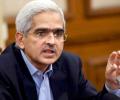
The rising COVID-19 infections across the country are a matter of concern, but it may not impact the ongoing economic revival as one does not foresee lockdowns, Reserve Bank Governor Shaktikanta Das said on Thursday. The economic revival will continue "unabated", Das said, asserting that there is no need for a downward revision of RBI's 10.5 per cent GDP growth forecast for FY22. Speaking at Times Network's India Economic Conclave, Das said, "We have 'insurance' to protect economic revival like a fast-paced vaccination drive, greater ability among people to follow COVID protocols", and one does not see lockdowns as well.

Already retail inflation has risen to 6.07 per cent in February, crossing the upper band of the Parliamentary mandate. This is the second consecutive month in 2022 when retail inflation has crossed the 6 per cent mark having hit 6.01 per cent in January.

The Reserve Bank will go for a "dovish pause" at Wednesday's policy review announcement amid developments such as a rise in inflation, government maintaining the inflation target band and a likely impact on growth due to local lockdowns on rising COVID-19 infections, analysts said on Monday. Economists at American brokerage Bofa Securities said price stability, growth and financial stability will become the prime focus areas for the central bank going forward. "The RBI MPC (Monetary Policy Committee) should deliver another dovish pause on Wednesday," it said. The policy announcement, the first for the fiscal, will come days after the government maintained the RBI's target to ensure inflation to be within 2-6 per cent band for five more years.

The increase was led almost entirely by foreign currency assets

JP Morgan has downgraded the Indian information technology sector to 'underweight' as it believes the heydays of the sector are over. Rising margin headwinds in the near-term and the revenue headwinds in the medium-term from a potential macro slowdown, Ankur Rudra and Bhavik Mehta of JP Morgan said in the report, will mean that the sector's earnings upgrade cycle is behind. "We see peak revenue growth behind us and earnings before interest and taxes (EBIT) margins trending down from inflation, mean revision.

'Today, there is no easy money to be made after the run-up in equities.'

The rupee fell to an all-time low of 61.21 per dollar, forcing the Reserve Bank of India to intervene to stabilise the currency.
The Reserve Bank of India said on Sunday it would allow investors who sell their local shares to companies for conversion into ADRs and GDRs to keep the money from the sale in a foreign currency account.

Overseas investors have pulled out a net Rs 1,14,855.97 crore from the Indian markets in the current year so far, amid heightened geopolitical tensions and inflation concerns. Foreign portfolio investors have sold domestic equities worth Rs 48,261.65 crore so far this month, taking the year-to-date tally this year to a massive Rs 114,855.97 crore, according to depositories data. The exodus of foreign investors was largely owing to inflationary pressures and deepening global macroeconomic conditions following the Russia-Ukraine war, experts said.

The protests brought home the fact that the Sri Lankan public is in no mood for halfway measures, as voices against Rajapaksa 'family rule' and 'securitisation' of the civilian administration began sidestepping the more critical economic crisis, affecting the nation and afflicting the individual, observes Sri Lanka watcher N Sathiya Moorthy.
Experts point to the bitter experience of countries including Mexico, Thailand, South Korea and Russia and desist from going forward with plans of issuance of such securities. They say rather than going abroad, the country should increase participation of foreign investor in the government securities which does not have any forex risk.

The government has hiked gold import duty to 15 per cent from 10.75 per cent to check the current account deficit (CAD) and rising import of the yellow metal. The duty changes came into effect on June 30. Earlier, the basic customs duty on gold was 7.5 per cent, now it will be 12.5 per cent.

The RBI opened a forex swap window in August to meet the entire daily dollar requirements of three oil marketing companies as the rupee depreciated to an all-time low of 68.85 against the US currency.
Foreign exchange reserves of eight Asian countries have depleted by a record $36 billion in August alone, as foreign investors pulled out money and central banks were seen using the reserves to prop up falling local currencies.

India is facing no risk of recession or stagflation as macroeconomic fundamentals of the economy are strong, Finance Minister Nirmala Sitharaman said on Monday. Replying to a debate on price rise in the Lok Sabha, she said the GST collection and Purchasing Managers' Index (PMI) are indicating that the Indian economy is getting more robust. The GST collection rose 28 per cent to touch the second-highest level of Rs 1.49 lakh crore in July. GST, introduced in July 2017, touched a record high of Rs 1.68 lakh crore in April 2022.

India's reserve position with the International Monetary Fund was down $4.4 million to $1.67 billion.

Kotak Bank was the top loser in the Sensex pack, falling around 3 per cent, followed by Axis Bank, Sun Pharma, HDFC Bank, Bajaj Finance and Asian Paints. On the other hand, ONGC, PowerGrid and IndusInd Bank were the gainers.

The gold reserves remained unchanged at $18.691 billion in the week.

Avoid thinking of investment as some 'become millionaire in a week' scheme, says Nikhil Sethi, founder and MD, Zuvomo, a crowdfunding firm. Always think of long term gains and plan your trades accordingly.
Gold reserves remained unchanged at $19.943 billion.
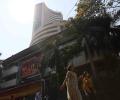
Currently, trades on the Indian stock exchanges are settled within two days, just like most major markets such as Singapore, Hong Kong, Australia, Japan, and South Korea. Indian exchanges, however, will be moving to T+1 settlement from February 25 in a phased manner.

Nepal's decision to ban the import of non-essential items amid depleting forex reserves may hit Indian exports. The country's central bank - Nepal Rastra Bank - last week instructed commercial banks not to open letters of credit (LCs) for importing non-essential items. This is to prevent further decline of the country's foreign exchange reserves. However, it has not issued any formal communication yet.
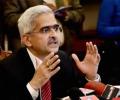
The Reserve Bank of India on Friday decided to leave benchmark interest rate unchanged at 4 per cent but maintained an accommodative stance as the economy faces heat of the second Covid wave.

Gold reserves remained unchanged at $21.584 billion.

In April and May, there were additions by RBI of 600 kg and 900 kg. RBI's total gold holding is now 561.9 tonnes.

Investors and companies should brace for higher commodity prices over the next few weeks in the backdrop of Russian troops attacking Ukraine on Thursday. Meanwhile, US President Joe Biden threatened new sanctions against Russia for an act of aggression against Ukraine. All this, analysts believe, can push prices of key commodities such as crude oil, ammonia, urea, potash, and phosphates higher.
 © 2026 Rediff.com - Advertise with us - Disclaimer - Privacy Policy - Sitemap - Feedback - About us - Terms of use - Grievances